|
COMETS EARTH JUPITER KUIPER BELT MARS MERCURY METEORITES NEPTUNE OORT CLOUD PLUTO SATURN SOLAR SYSTEM SPACE SUN URANUS VENUS ORDER PRINTS
PHOTO CATEGORIES SCIENCEVIEWS AMERICAN INDIAN AMPHIBIANS BIRDS BUGS FINE ART FOSSILS THE ISLANDS HISTORICAL PHOTOS MAMMALS OTHER PARKS PLANTS RELIGIOUS REPTILES SCIENCEVIEWS PRINTS
|
 |
Related Document
Download Options
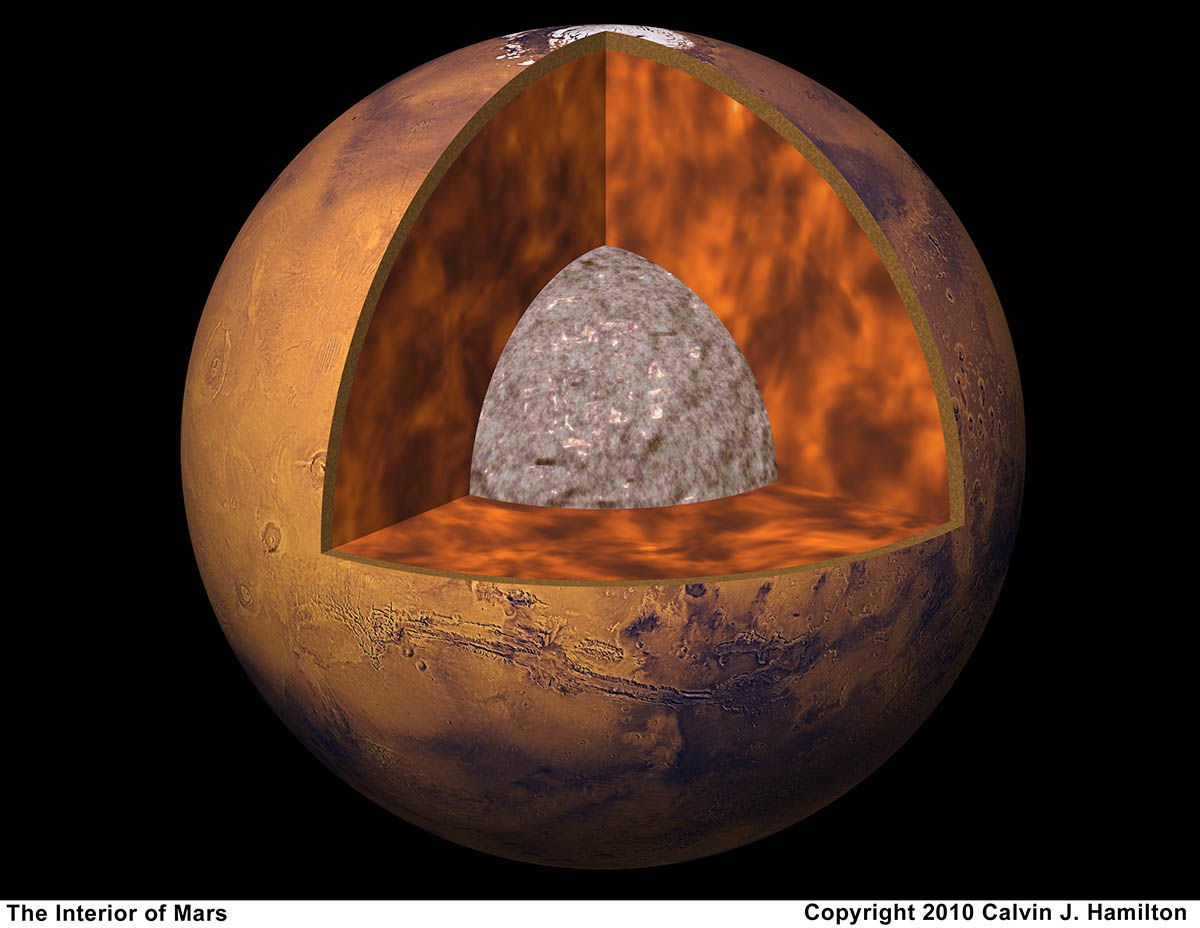
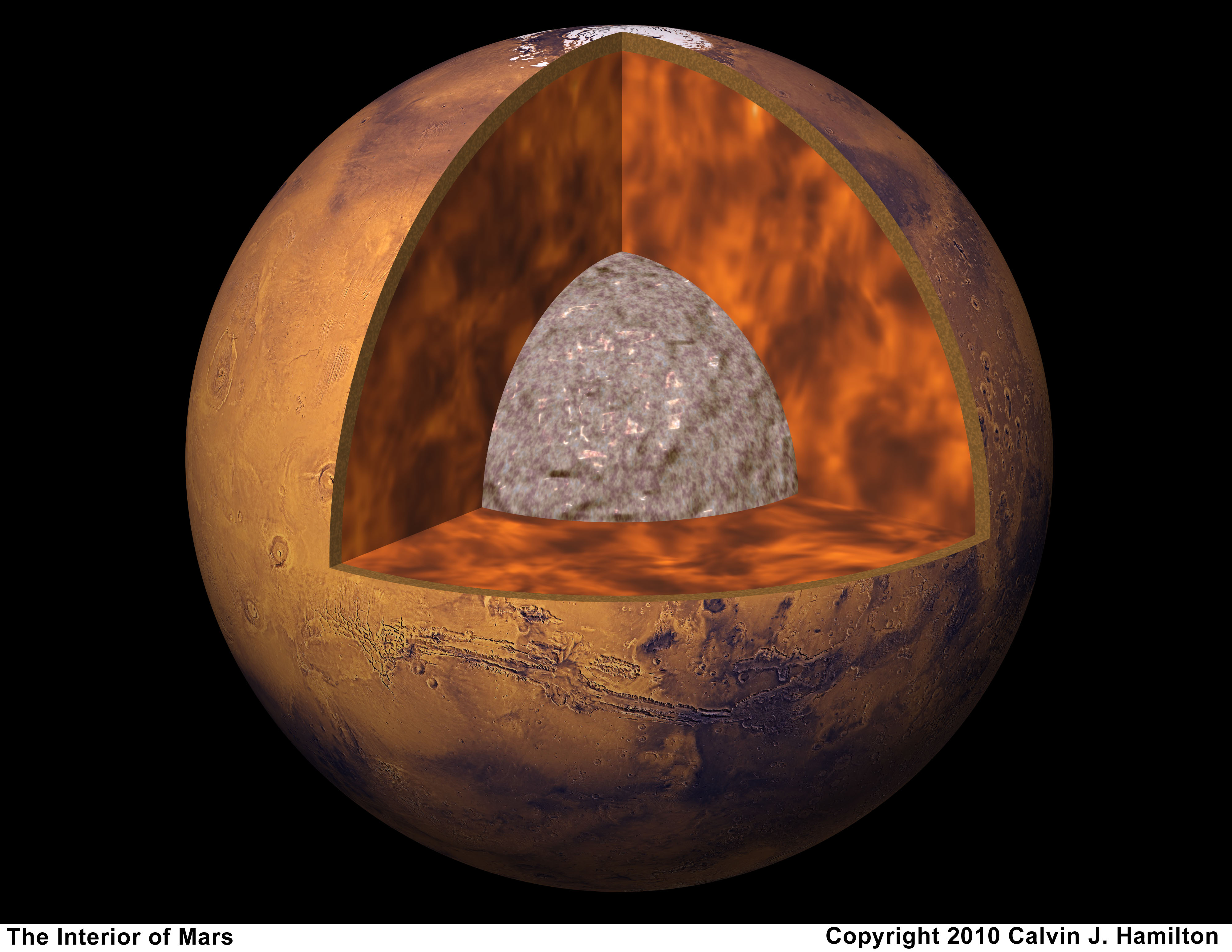
The current understanding of the interior of Mars suggests that it can be modeled with a thin crust, similar to Earth's, a mantle and a core. Using four parameters, the Martian core size and mass can be determined. However, only three out of the four are known and include the total mass, size of Mars, and the moment of inertia. Mass and size was determined accurately from early missions. The moment of inertia was determined from Viking lander and Pathfinder Doppler data, by measuring the precession rate of Mars. The fourth parameter, needed to complete the interior model, will be obtained from future spacecraft missions. With the three known parameters, the model is significantly constrained. If the Martian core is dense (composed of iron) similar to Earth's or SNC meteorites thought to originate from Mars, then the minimum core radius would be about 1300 kilometers. If the core is made out of less-dense material such as a mixture of sulfur and iron, the maximum radius would probably be less than 2000 kilometers. This image is Copyright © 2010 by Calvin J. Hamilton. Any commercial/for-profit use of this image needs to be addressed to Calvin J. Hamilton. |
|||||||||||||||||||||||||||||||||